Most Danish enterprises still run their PMO as a reporting and compliance function — tracking RAG statuses and Gantt charts while actual business value quietly evaporates. The profession has moved on. It's time Danish programme leaders caught up.
The Uncomfortable Truth About Your PMO
Let me be direct: if your Programme Management Office still defines success as "delivered on time, on scope, and on budget," you are running an operating model designed for a world that no longer exists.
I don't say this to provoke. I say it because I've spent years sitting in steering committees across Danish enterprises — public and private — watching well-intentioned programme leaders present immaculate RAG status reports while the strategic rationale for the programme slowly dissolves in the background. Nobody asks the hard question: Are we actually creating the value we set out to create?
The classic PMO was built for control. It emerged in an era when the primary risk was project overrun — when the biggest fear was that an IT implementation would blow its budget or miss its deadline. That fear was legitimate. The response was reasonable. We built offices dedicated to governance, reporting, compliance, and process standardisation.
But somewhere along the way, we confused the instrument with the objective. We optimised for delivery predictability and lost sight of why we were delivering in the first place.
This isn't just my observation. PMI's latest frameworks explicitly reposition the PMO as a Value Delivery Office. Gartner has been pushing the Strategic Value Office concept with increasing urgency. And here in Denmark, we have a canary in the coal mine that should make every programme leader pay attention.
Rigsrevisionen's Warnings Are Not Just a Public-Sector Problem
Rigsrevisionen — Denmark's national audit office — has repeatedly criticised the governance of large public IT programmes. Their reports on digitalisation projects paint a consistent picture: programmes that follow process diligently but fail to deliver the intended benefits. A documented failure rate exceeding 53% in managing digitalisation projects is not a statistical curiosity. It is a systemic indictment of how we think about programme governance.
Now, if you're a private-sector programme leader, you might be tempted to dismiss this as a government problem. Don't. The structural issues Rigsrevisionen identifies — weak benefits ownership, insufficient strategic alignment, governance frameworks that track activity rather than outcomes — are exactly the same patterns I see in Danish mid-to-large enterprises every week.
The difference is that public-sector failures get audited and published. Private-sector failures get buried in write-offs, quietly restructured portfolios, and vague board presentations about "lessons learned." The dysfunction is the same. The accountability is just less visible.
And that accountability gap is closing. The EU's broader governance push — including compliance programmes around the AI Act that require robust benefit-tracking and impact assessment — is creating new expectations for how organisations demonstrate that their investments actually deliver what was promised. Danish boards are starting to ask harder questions. Programme leaders need better answers.
What a Value Delivery Office Actually Means in Practice
Let me be clear about what the shift from PMO to VDO is not. It is not a rebranding exercise. You cannot take your existing PMO, change the name on the door, add "value" to a few slide templates, and call it transformation. I've seen organisations try this. It doesn't work, and it actively damages credibility.
The shift is fundamental. It changes what you measure, what you own, what conversations you have, and what skills you need.
From output metrics to outcome metrics. A traditional PMO measures scope delivered, schedule adherence, and budget consumption. A Value Delivery Office measures benefits realised, strategic alignment maintained, and organisational capability built. This sounds simple on paper. In practice, it requires a complete rewiring of how programmes define success criteria at inception and how they track progress throughout execution.
Consider a typical digital transformation programme. The PMO model says: "We delivered the new platform on time and within 5% of budget." The VDO model says: "The new platform has been adopted by 78% of target users, has reduced processing time by 34%, and has enabled two new revenue streams that are tracking toward the business case projection." Same programme. Completely different definition of done.
From governance police to strategic partner. The classic PMO often functions as an internal compliance function — the office that chases project managers for status updates and ensures methodology is followed. The VDO functions as a strategic translation layer between the board's intent and the portfolio's execution. It doesn't just report on what's happening; it interprets what's happening in the context of whether the organisation is moving toward its strategic objectives.
From project lifecycle to benefits lifecycle. Perhaps the most important shift: the VDO's mandate extends beyond project delivery into benefits realisation. In most Danish organisations today, the moment a project closes, accountability for the promised benefits evaporates. The project team disbands. The business case gathers dust. Nobody tracks whether the projected value actually materialised. The VDO closes this gap by maintaining benefits ownership through realisation — which often extends 12-24 months beyond project closure.
The Three Board-Level Conversations Programme Leaders Must Now Have
If you lead a programme function in a Danish enterprise, your board-level conversation needs to change. Today. Not next quarter. Here are the three conversations that define VDO-level programme leadership:
1. Strategic Intent Translation
Most programme portfolios suffer from what I call "strategic drift" — the gradual disconnection between the board's strategic intent and the actual work being executed. This happens because strategy is articulated in broad, directional language ("become more customer-centric," "accelerate digital maturity") while programmes are defined in concrete, bounded deliverables. The translation between these two levels is where value is created or destroyed.
The programme leader's job is to own that translation explicitly. This means sitting in strategy discussions, not just receiving their output. It means challenging programme proposals that deliver outputs without a credible line of sight to strategic outcomes. And it means having the courage to recommend that programmes be stopped or redirected when the strategic context changes — even if the programme is executing flawlessly against its original plan.
This is uncomfortable. It requires a fundamentally different relationship with the board than most PMO leaders have today. But it is non-negotiable if you want to close the strategy-execution gap.
2. Benefits Ownership
Here's a question that exposes the gap immediately: In your organisation, who owns the benefits case after a programme is approved?
In most Danish enterprises, the answer is unclear. The business case was written to secure funding. The programme team is accountable for delivery. But the benefits — the actual value that justified the investment — sit in a governance no-man's-land. The programme leader says the business owns the benefits. The business says the programme was supposed to deliver them. Nobody is accountable, and unsurprisingly, nobody tracks realisation.
The VDO model demands that this ambiguity is resolved. The programme leader must facilitate a clear, named, board-level benefits ownership structure for every significant investment. This doesn't mean the programme leader owns the benefits — it means they ensure someone does, and that realisation is tracked with the same rigour as delivery milestones.
3. Adaptive Portfolio Prioritisation
Traditional portfolio management in Danish enterprises tends to follow an annual cycle: business cases are submitted, evaluated, and approved during budget season. Once approved, programmes run until completion or until someone has the political courage to kill them. Mid-cycle reprioritisation is rare, painful, and often treated as failure.
The VDO model treats portfolio prioritisation as a continuous, adaptive process. The programme leader brings the board a living view of the portfolio — not just delivery status, but value trajectory. Which programmes are tracking toward their benefits case? Which have seen their strategic context shift? Where should we reallocate capacity to maximise value, even if it means stopping something that's "going well" by traditional metrics?
This is the conversation that separates a reporting function from a strategic function. And it's the conversation most Danish PMO leaders are not yet equipped to have — not because they lack intelligence, but because their mandate, their data, and their organisational position haven't been designed for it.
A Practical Transition Roadmap: Retrofitting Your PMO Without a Full Reorganisation
I'm a pragmatist. I know that most Danish enterprises cannot — and should not — attempt a wholesale PMO transformation overnight. The good news is that the shift toward a VDO model can be made incrementally, without a full reorganisation, if you're deliberate about sequencing.
Here's the roadmap I recommend for mid-to-large Danish enterprises:
Phase 1: Establish Benefits Tracking on Your Top Five Programmes (Months 1-3)
Don't try to boil the ocean. Pick your five most strategically significant programmes. For each one, work with the business sponsor to define three to five measurable benefits with clear baselines, targets, and measurement methods. Assign named benefits owners. Begin tracking realisation alongside delivery status.
This is not a methodology change. It's an addition to your existing PMO governance practice. It creates immediate visibility and builds the muscle for outcome-oriented conversation.
Phase 2: Introduce Strategic Alignment Scoring to Portfolio Reviews (Months 3-6)
Augment your existing portfolio review process with a strategic alignment dimension. For each programme, assess and score its current alignment with stated strategic priorities. This creates the data foundation for the adaptive prioritisation conversation described above.
The key here is honesty. Some programmes that are executing well will score poorly on strategic alignment because the context has shifted since they were approved. That's not failure — that's intelligence. The VDO model treats this as valuable information, not as an inconvenience.
Phase 3: Reposition the PMO Leader's Board Engagement (Months 6-9)
This is the hardest phase because it's about relationships and mandate, not process. The programme leader needs to shift from presenting delivery status reports to facilitating strategic value conversations. This typically requires explicit sponsorship from the CEO or CFO, and it often requires a change in the format and frequency of board-level programme reporting.
I've found that the most effective approach is to pilot a new reporting format — one that leads with value trajectory and strategic alignment, supported by delivery status — and let the quality of the conversation speak for itself.
Phase 4: Extend the Mandate to Benefits Realisation (Months 9-18)
Once the organisation has experience with benefits tracking and strategic alignment, extend the VDO's mandate to include post-delivery benefits realisation monitoring. This is where the real value of the model becomes visible, because it closes the loop between investment decision and actual outcome.
This phase often requires adjustments to project management practices at the programme level, including how projects are closed and how accountability transitions from delivery teams to operational business owners.
Phase 5: Build Continuous Portfolio Adaptation into the Operating Rhythm (Months 12-24)
The final phase moves portfolio prioritisation from an annual event to a quarterly (or more frequent) adaptive process. This requires mature benefits data, strong strategic alignment scoring, and — critically — a board that trusts the programme function to provide honest, actionable intelligence about where value is and isn't being created.
The Skills Gap: Why This Can't Wait for Internal Capability Alone
Here's the part that most articles on this topic gloss over: the shift from PMO to VDO requires fundamentally different skills than most programme offices currently possess.
Classic project management skills — scheduling, risk management, stakeholder reporting, methodology compliance — are necessary but radically insufficient for the VDO mandate. The VDO model requires people who can think strategically, facilitate board-level conversations about value, challenge business cases with commercial rigour, and navigate the political complexity of telling a senior executive that their pet programme isn't delivering the promised benefits.
These are not skills you develop by sending your PMO team on a two-day course. They are built through years of experience operating at the intersection of strategy, execution, and organisational politics.
This is where the transition gets stuck in many Danish organisations. The ambition is right. The roadmap is clear. But the internal capability to execute the shift — particularly the senior programme leadership required to have credible board-level value conversations — simply isn't there yet.
This is not a criticism of existing PMO teams. It's a recognition that the profession is evolving faster than most organisations' internal development cycles can keep pace with. The skills required for VDO-level programme leadership are scarce in the Danish market, and building them internally takes time.
The practical bridge is interim programme leadership — experienced leaders who have operated at the VDO level in other contexts and can both execute the transition and develop internal capability simultaneously. This isn't about replacing your team. It's about accelerating a transition that your team will ultimately own, while ensuring you don't lose 18 months trying to build the plane while flying it.
The Cost of Inaction
I want to close with a calculation that most Danish programme leaders haven't made.
Consider your current programme portfolio. What is the total investment across all active programmes? In a typical Danish mid-to-large enterprise, this is somewhere between 100 million and 500 million DKK annually. Now consider: what percentage of that investment is being tracked against actual business outcomes — not delivery milestones, but real, measurable value creation?
In my experience, the answer is typically less than 20%. That means 80% of your programme investment is being managed on faith — faith that delivery will translate to value, faith that the business case assumptions still hold, faith that someone, somewhere, is making sure the promised benefits actually materialise.
That's not governance. That's hope. And hope is not a strategy.
The shift from PMO to VDO is not an academic exercise. It's not a framework du jour. It's the difference between running a programme function that can demonstrate its contribution to enterprise value and running one that can only demonstrate its contribution to delivery throughput.
Danish programme leaders who make this shift will find themselves with a fundamentally different seat at the table — not as the governance function that reports on projects, but as the strategic function that ensures investments create value. Those who don't will continue to deliver projects that land on time and on budget but miss the point entirely.
The frameworks exist. The roadmap is practical. The urgency is real. The question is whether you'll lead this shift or be overtaken by it.
*Jacob Plejdrup helps Danish enterprises bridge the gap between strategy and execution through interim programme leadership and PMO transformation. If your organisation is wrestling with the shift from project delivery to value delivery, reach out for a conversation.*
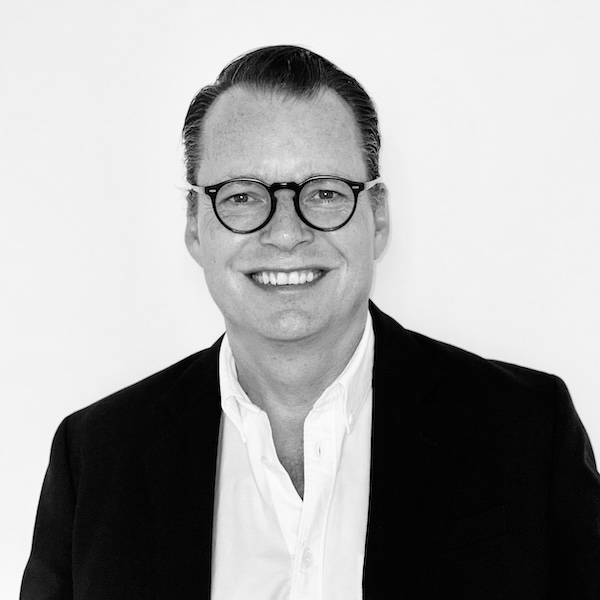
About the Author
Jacob Langvad Nilsson
Technology & Innovation Lead
Jacob Langvad Nilsson is a Digital Transformation Leader with 15+ years of experience orchestrating complex change initiatives. He helps organizations bridge strategy, technology, and people to drive meaningful digital change. With expertise in AI implementation, strategic foresight, and innovation methodologies, Jacob guides global organizations and government agencies through their transformation journeys. His approach combines futures research with practical execution, helping leaders navigate emerging technologies while building adaptive, human-centered organizations. Currently focused on AI adoption strategies and digital innovation, he transforms today's challenges into tomorrow's competitive advantages.
Ready to Transform Your Organization?
Let's discuss how these strategies can be applied to your specific challenges and goals.
Get in touchRelated Services
Related Insights
Nobody Owns the Middle: Closing the Accountability Gap in Enterprise Transformation Programmes
*Digital transformations don't fail because of strategy or technology. They fail in the unowned layer between C-suite ambition and team-level execution — and most organisations don't even have a name
Annual Budgets Are Killing Your Agile Transformation — And What Nordic Executives Can Do About It
Most Nordic enterprises have adopted agile delivery methods but left their annual budgeting and governance cycles completely intact. The result is governance theatre — and it's the single biggest reason agile transformations fail to deliver at scale.